
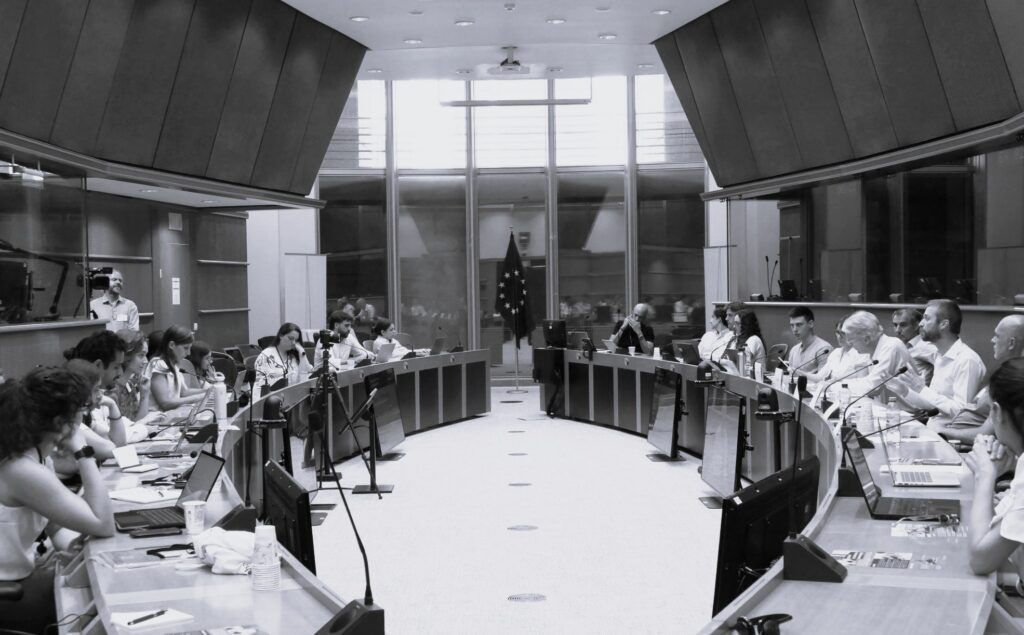
On 23 June, Renovate Europe gathered educators, students, policymakers and technical experts at the European Parliament to debate how educational buildings can lead the transition to a zero-emission, climate-resilient building stock by 2050.
Organised by Renovate Europe and hosted by Member of the European Parliament Marcos Ros Sempere (S&D, Spain), the roundtable on the Educational Buildings Campaign highlighted the urgent need to place schools at the heart of Europe’s renovation agenda. The timing of the event could hardly have been more relevant as it took place during the second heatwave of the year, forcing schools to close down as many of them are poorly equipped to handle rising temperatures. Inadequate thermal performance, insufficient solar control and a lack of natural ventilation leave classrooms overheating in summer and poorly insulated in winter, undermining the comfort, wellbeing and learning conditions of students and teaching staff alike.
Bringing together representatives of parents, students, renovation and energy efficiency experts, alongside officials from the European Commission and Members of the European Parliament, the discussion focused on how deep renovation can simultaneously improve energy performance, climate resilience and educational outcomes. The event was also an opportunity for CLIMACT to present its analysis of the National Building Renovation Plans, developed with the participation of Glass for Europe. The study assessed how Member States are integrating long-term renovation strategies into their national plans and identified opportunities to better prioritise educational buildings as strategic public assets.
With heatwaves more frequent and intense, speakers agreed that investing in the renovation of Europe’s schools is no longer simply an energy policy, it is an investment in children’s health, educational quality and the resilience of communities across Europe. Adrien Carton, Sustainable Construction Manager at Glass for Europe, seized the opportunity to highlight the glazing industry’s solutions for preventing overheating in educational buildings while maintaining a connection with the outdoors.
More information on the Educational Buildings Campaign can be found here.
