
Construction Products Regulation of 2024
The implementation of the next generation of CE marking for building glass is anticipated between 2028 and 2032.
The European Union revised its Construction Products Regulation in 2024 (CPR 2024), which governs the placement of construction products on the EU market. Because building glass is essential to modern construction, these changes will impact everyone across the value chain, including manufacturers, processors, customers, and users.
This page provides a practical overview of the CPR 2024, including insights into the main new requirements for the flat glass sector. It also outlines key milestones and deadlines to consider. As the CPR 2024 is still being implemented and secondary legislation is being published, this page will be updated according to the latest information.
Disclaimer
Glass for Europe cannot be held liable for errors, omissions, or use by third parties of information and data provided on this page. The information is based on Glass for Europe’s interpretation of the Construction Products Regulation (Regulation (EU) 2024/3110) and the inputs gathered by Glass for Europe while following the implementation of the legislation.
This information is purely indicative and numerous elements are provisional. As soon as updates are available, the page will be updated. This information is not suitable for ensuring stakeholder compliance with the CPR. For this purpose, the legislation itself should be consulted.
Placing construction products on the EU market
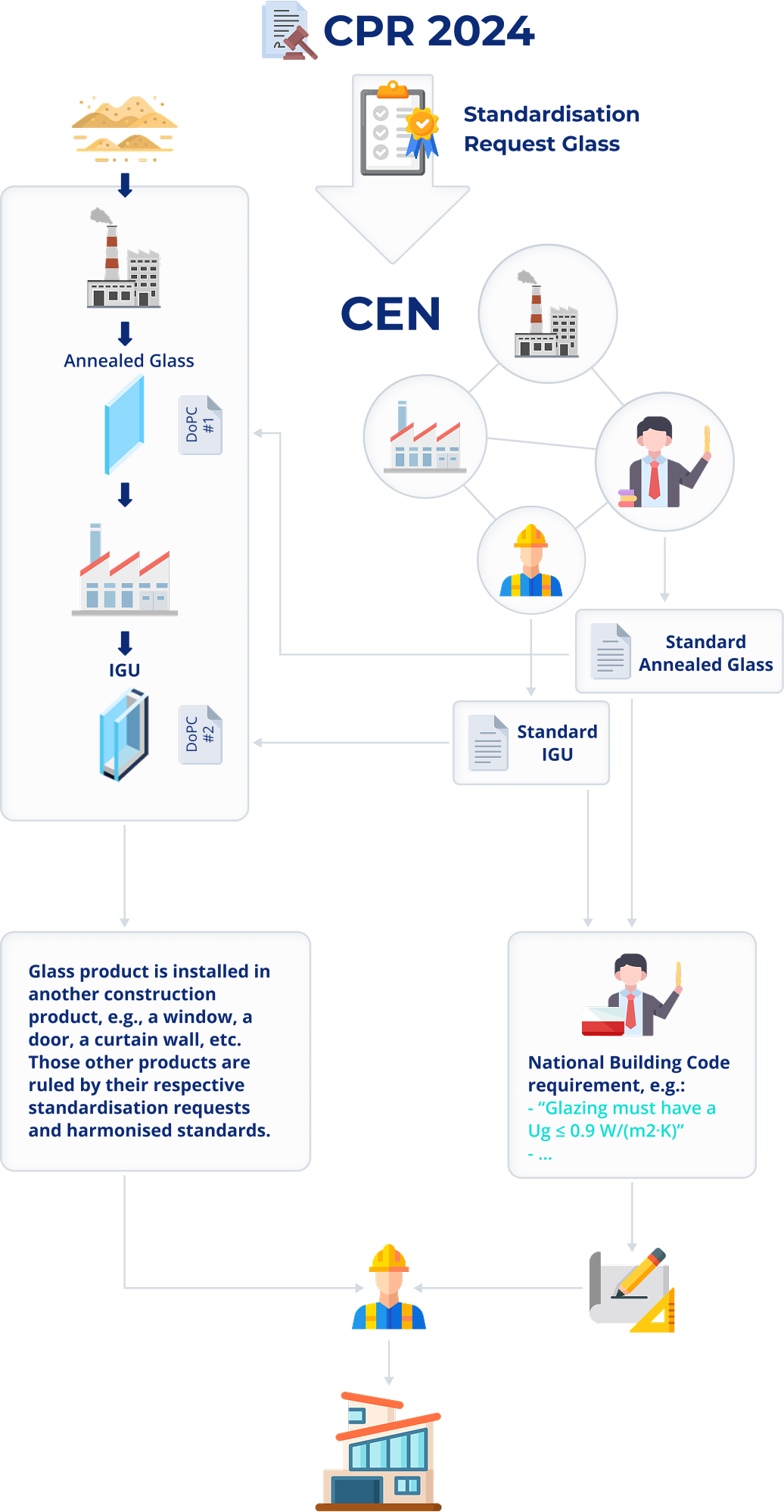
The CPR 2024 establishes the development of standardisation requests for each product family.
A standardisation request is a formal request issued by the European Commission to CEN to develop European standards in support of EU legislation and policies. It defines the scope, objectives, deadlines, and expected deliverables (harmonised product standards).
The standardisation request for glass in building (Sreq GLA) is currently planned to be published by the European Commission in 2026 as an Implementing Act under the CPR 2024.
Once published, the Sreq GLA will be officially transmitted to CEN for acceptance and execution.
The CEN Technical Committee for glass in building (CEN TC 129) will write or revise product standards as specified by Sreq GLA.
Once a product standard conforms with the applicable legal requirements of the CPR 2024 and with the specific Sreq GLA, it will be approved by the European Commission through an implementing act. The product standard becomes a harmonised standard (hEN).
A harmonised standard must be followed (by law) to place the product it covers on the EU market.
Importantly, products that do not have a harmonised standard can only be CE-marked and placed on the market according to the CPR of 2011, following the old standard.
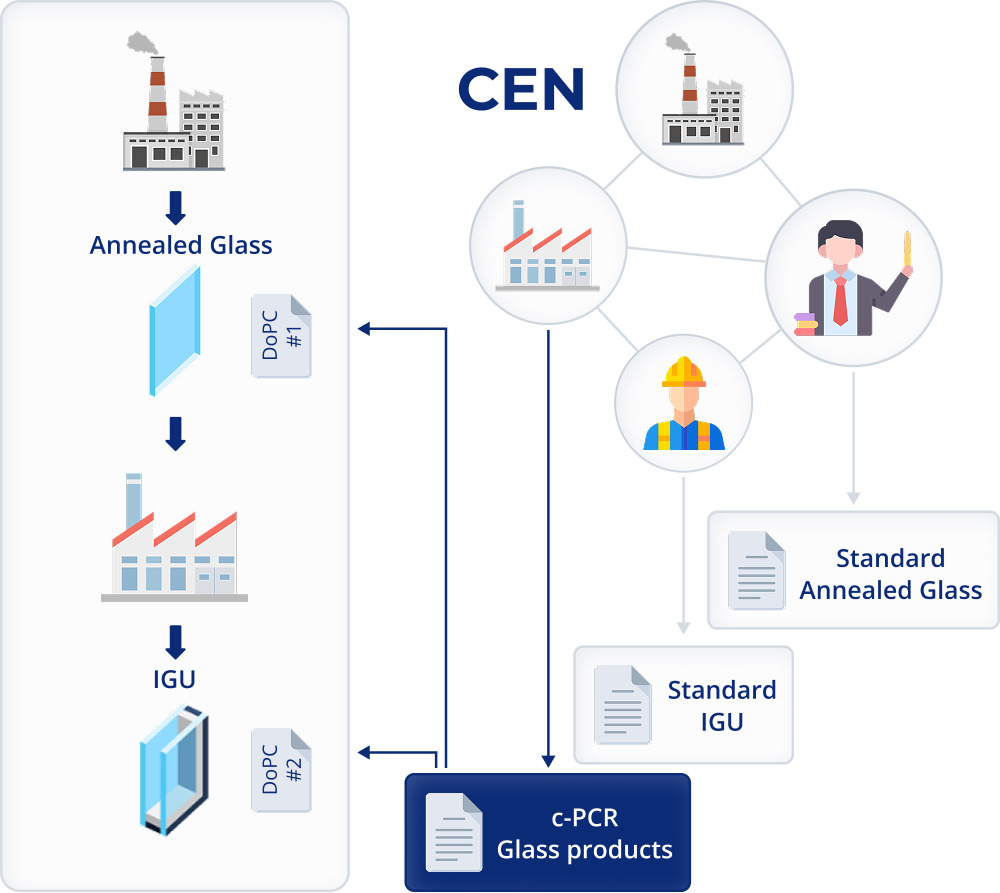
Construction products manufacturers must draw up a Declaration of Performance and Conformity (DoPC) and affix the CE-marking to products covered by such harmonised standards.
The DoPC express the performance of products relative to the characteristics specified in the harmonised standards. In the CPR 2024, this also includes environmental characteristics.
When the Digital Product Passport (DPP) system is ready, a construction product’s DoPC will need to be made available, alongside other pieces of documentation, through a DPP.
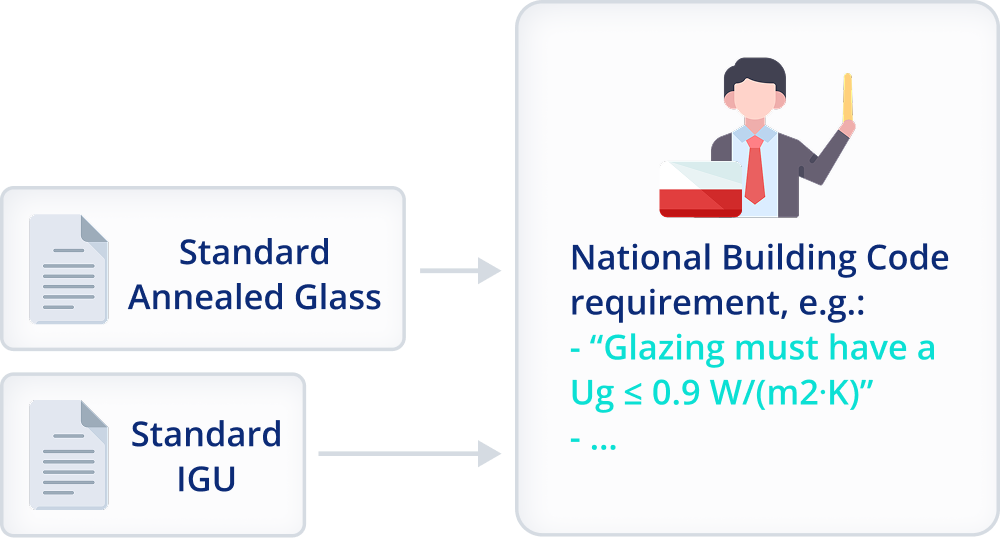
Member States must use the harmonised standard’s assessment method, classes and thresholds when writing their National Building Codes or regulations.
Construction companies will be able to fill their building-related obligations using CE-marked products, whose performance is reported in the DoPC.
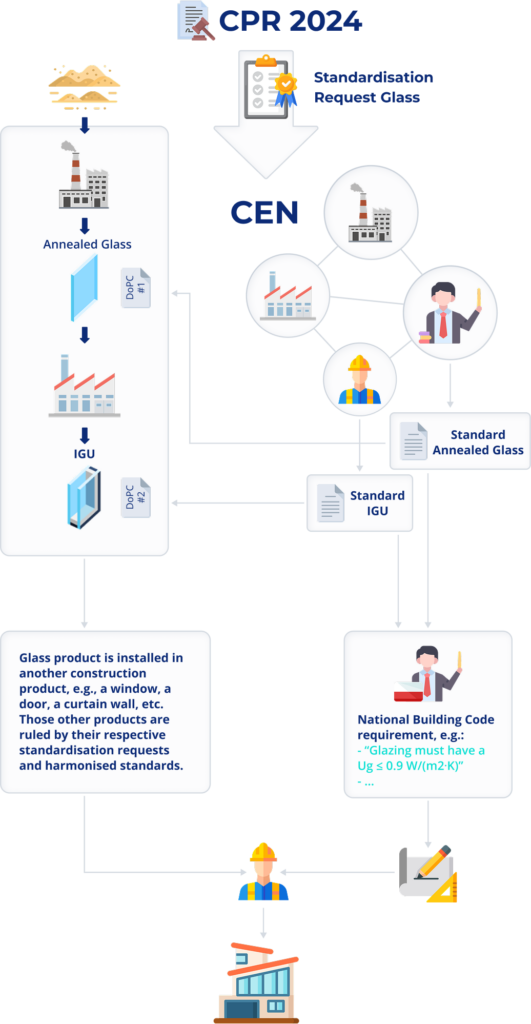
The CPR 2024 establishes the development of standardisation requests for each product family.
A standardisation request is a formal request issued by the European Commission to CEN to develop European standards in support of EU legislation and policies. It defines the scope, objectives, deadlines, and expected deliverables (harmonised product standards).
The standardisation request for glass in building (Sreq GLA) is currently planned to be published by the European Commission in 2026 as an Implementing Act under the CPR 2024.
Once published, the Sreq GLA will be officially transmitted to CEN for acceptance and execution.
The CEN Technical Committee for glass in building (CEN TC 129) will write or revise product standards as specified by Sreq GLA.
Once a product standard conforms with the applicable legal requirements of the CPR 2024 and with the specific Sreq GLA, it will be approved by the European Commission through an implementing act. The product standard becomes a harmonised standard (hEN).
A harmonised standard must be followed (by law) to place the product it covers on the EU market.
Importantly, products that do not have a harmonised standard can only be CE-marked and placed on the market according to the CPR of 2011, following the old standard.
Construction products manufacturers must draw up a Declaration of Performance and Conformity (DoPC) and affix the CE-marking to products covered by such harmonised standards.
The DoPC express the performance of products relative to the characteristics specified in the harmonised standards. In the CPR 2024, this also includes environmental characteristics.
When the Digital Product Passport (DPP) system is ready, a construction product’s DoPC will need to be made available, alongside other pieces of documentation, through a DPP.
Member States must use the harmonised standard’s assessment method, classes and thresholds when writing their National Building Codes or regulations.
Construction companies will be able to fill their building-related obligations using CE-marked products, whose performance is reported in the DoPC.
References:
Construction Products Regulation (Regulation EU 2024/3110)
Construction Products Europe’s CPE guide for manufacturers: Available in Czech, Dutch, English, French, German, Greek, Norwegian, Polish, Portuguese, and Spanish.
Standardisation of building glass
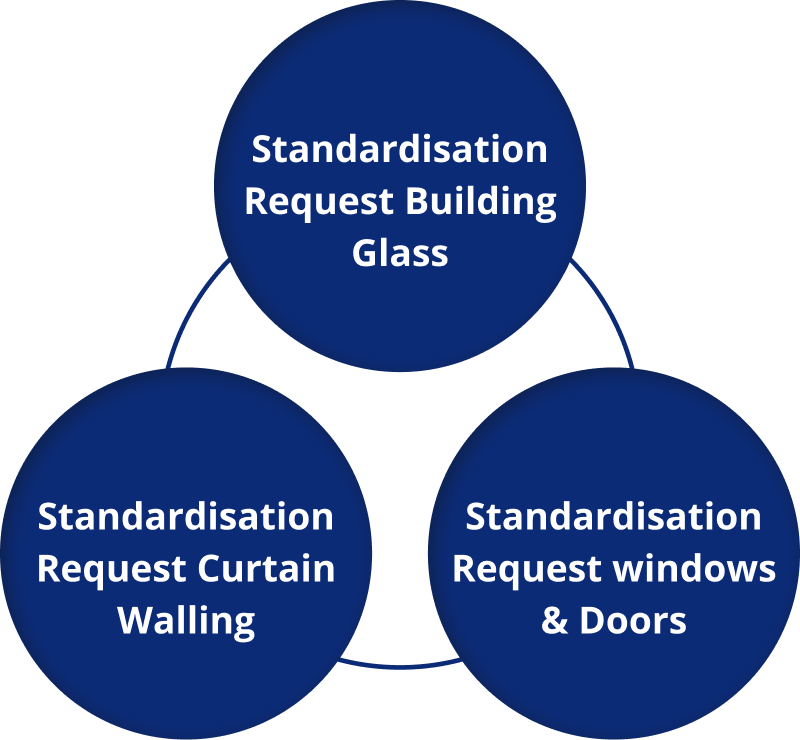
For building glass products, more than 30 product standards will need to be written or revised by CEN TC 129:
- The ideal scenario is to align standardisation work for building glass with the timelines for windows and doors (and if possible, with curtain walls).
- The standardisation request for building glass is planned to be ready in early 2026, in line with the standardisation request for windows and doors.
Current Proposal of Standardisation Program Included in the Preparation of the Sreq GLA
| What | hENs | 2024 | 2025 | 2026 | 2027 | 2028 | 2029 | 2030 | 2031 | 2032 | |
|---|---|---|---|---|---|---|---|---|---|---|---|
| 0 | "c-PCR EPD EN 15804 all products" | Draft | Public Enquiry and finalization | Formal vote and publication | |||||||
| 1 | hEN basic glass products & special basic glass products, adhesive backed polymeric films | 6 | Publication of hENs | ||||||||
| c-PCR DOP CPR → basic glass products & special basic glass products + adhesive backed polymeric films | Draft | Public Enquiry and finalization | Formal vote and publication | ||||||||
| 2 | hEN prestressed glass and curved monolithic glass | 13 | Publication of hENs | ||||||||
| c-PCR DOP CPR → prestressed glass and curved monolithic glass | Draft | Public Enquiry and finalization | Formal vote and publication | ||||||||
| 3 | hEN coated glass, laminated glass, BIPV, mirrors, painted glass, sand blasted glass, acid etched glass, VIG | 10 | Publication of hENs | ||||||||
| c-PCR DOP CPR → coated glass, laminated glass, BIPV, mirrors, painted glass, sand blasted glass, acid etched glass, VIG | Draft | Public Enquiry and finalization | Formal vote and publication | ||||||||
| 4 | hEN insulating glass unit | 1 | Publication of hENs | ||||||||
| c-PCR DOP CPR → insulating glass unit | Draft | Public Enquiry and finalization | Formal vote and publication | ||||||||
| 5 | hEN adhesive backed polymeric filmed glass, prestressed channel shaped glass, glass blocks | 4 | Publication of hENs | ||||||||
| c-PCR DOP CPR → adhesive backed polymeric filmed glass, prestressed channel shaped glass, glass blocks | Draft | Public Enquiry and finalization | Formal vote and publication |
Alignment with the Ecodesign requirements for Sustainable Products Regulation

The Ecodesign requirements for Sustainable Products Regulation (ESPR) delegates the application of its ecodesign requirements to the Construction Products Regulation. This includes sustainability and digitalisation requirements.
Sustainability requirements for building glass products
The CPR 2024 aims to increase the sustainability of the construction sector by providing environmental data on construction products:
- The content of Environmental Product Declarations (EPDs) will need to be gradually displayed in the Declaration of Performance and Conformity (DoPC) following this timeline:
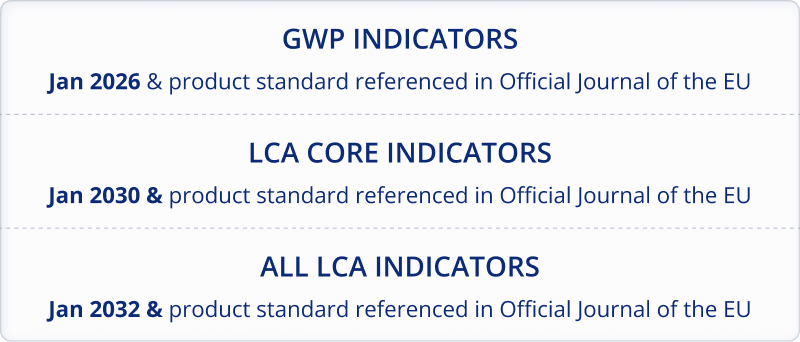
- Complementary Product Category Rules (c-PCR) for flat glass and channel shaped glass products (EN 17074, new version expected for 2026) will provide the specific rules for the environmental declarations for glass in building, while EN 15804:2012 + A2:2019 gives the core rules for all construction products.
These environmental data will support the implementation of the Energy Performance of Buildings Directive:
- The Energy Performance of Buildings Directive relies on CPR data for the calculation of the life-cycle global warming potential of buildings.
- Member States must use the harmonised standard’s assessment method, classes and thresholds when writing environmental sustainability rules in their National Building Codes or regulations.
Digitialisation of building glass products information
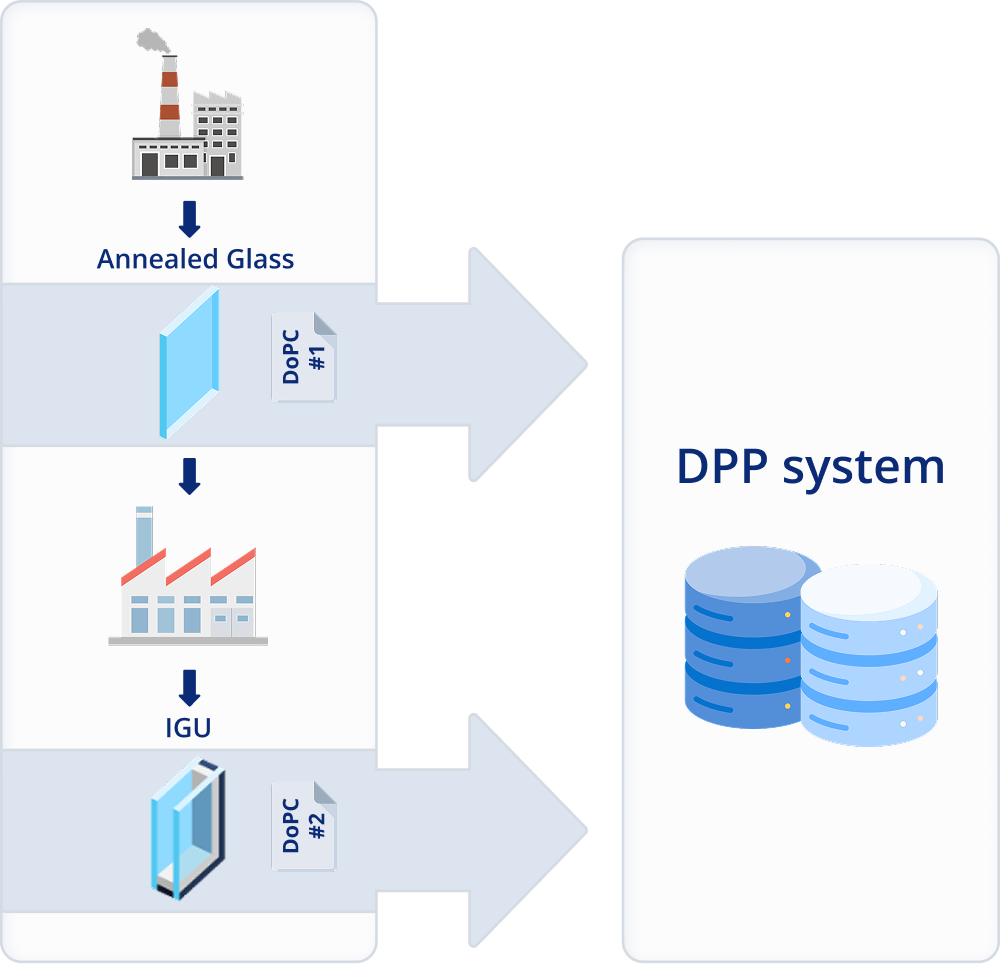
The CPR 2024 establishes the use of digital tools to share performance data in a BIM-compatible format.
Every product needs to be linked to a “Digital Product Passport” (DPP), i.e., a digital dataset including:
- Declaration of Performance and Conformity
- Instructions for use
- Safety information
- Technical documentation and documentation required by other EU legislation
- Data carriers linked to the DPP of key product parts
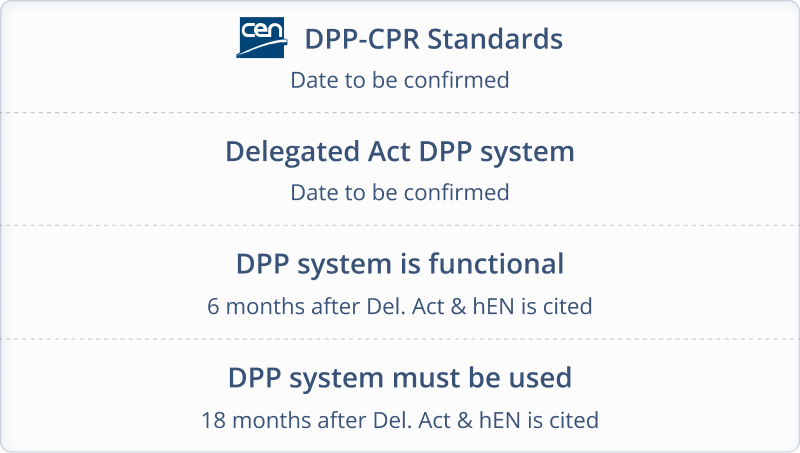
The exact format and the functioning rules of the DPP are currently under development. Here are the key stages and their status:
References:
Glass for Europe answer to the DPP consultation
Feasibility study on the establishment of the Construction Products Regulation (CPR) Digital Product Passport (DPP) system: Report
Our position papers on the CPR:
Joint position on the use of verified software tools to assess product performance (2026)
The application of the verification procedures under AVS3+ should be made simple (2026)
Joint paper on future rules to declare the environmental performance of products (2025)
Rules for the declaration of environmental characteristics of construction products (2025)
Reuse, remanufacturing, recycling: the case of glass for buildings (2025)
Revision of the Construction Products Regulation (2022)
Frequently Asked Questions
Lorem ipsum dolor sit amet, consectetur adipiscing elit ?
Donec vitae sapien ut libero venenatis faucibus. Nullam quis ante. Etiam sit amet orci eget eros faucibus tincidunt. Duis leo.
Sed do eiusmod tempor incididunt ut ?
Donec vitae sapien ut libero venenatis faucibus. Nullam quis ante. Etiam sit amet orci eget eros faucibus tincidunt. Duis leo.
Ut enim ad minim veniam, quis nostrud ?
Donec vitae sapien ut libero venenatis faucibus. Nullam quis ante. Etiam sit amet orci eget eros faucibus tincidunt. Duis leo.
Lorem ipsum dolor sit amet, consectetur adipiscing elit ?
Donec vitae sapien ut libero venenatis faucibus. Nullam quis ante. Etiam sit amet orci eget eros faucibus tincidunt. Duis leo.
Sed do eiusmod tempor incididunt ut ?
Donec vitae sapien ut libero venenatis faucibus. Nullam quis ante. Etiam sit amet orci eget eros faucibus tincidunt. Duis leo.
Ut enim ad minim veniam, quis nostrud ?
Donec vitae sapien ut libero venenatis faucibus. Nullam quis ante. Etiam sit amet orci eget eros faucibus tincidunt. Duis leo.